
Every student learns differently. Some understand new concepts quickly, while others need additional explanations, practice, or feedback. In a traditional classroom, meeting these different learning needs can be challenging, especially when teachers work with large groups of students and limited time.
Digital technology is creating new opportunities to address this challenge. Adaptive learning systems use information about students’ progress and performance to adjust learning activities, provide targeted support, and recommend suitable next steps.
The growing use of adaptive learning systems in education is helping schools explore more personalized approaches to teaching. Rather than requiring every student to complete exactly the same activity at the same pace, these systems can offer learning experiences that respond to individual progress.
However, adaptive technology is not a complete replacement for teachers or traditional instruction. Its effectiveness depends on the quality of the learning content, the accuracy of its recommendations, and how well educators integrate it into classroom practice.
This article explains how adaptive learning systems work, their major benefits, practical classroom applications, common challenges, and strategies for implementing them effectively.
What Are Adaptive Learning Systems in Education?
Adaptive learning systems are digital educational platforms that adjust learning content, activities, difficulty levels, or feedback according to information about a learner’s needs and performance.
These systems may analyze quiz answers, task completion, response patterns, and progress through learning materials. Based on this information, they can recommend additional practice, introduce more challenging questions, or provide explanations for concepts a student has not yet mastered.
For example, a student learning fractions might receive additional exercises on equivalent fractions after answering several questions incorrectly. Another student who demonstrates strong understanding may move on to more advanced problems.
The goal is to make learning more responsive to each student’s current needs.
Some systems use predefined rules to adjust activities, while others use statistical models or artificial intelligence to generate recommendations. Not every adaptive learning platform uses AI, and the level of personalization varies between products.
How Do Adaptive Learning Systems Work?
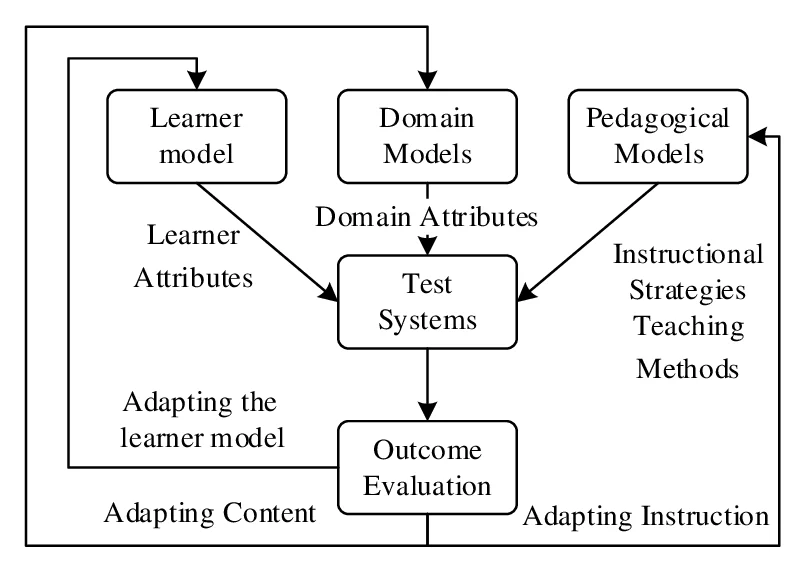
Adaptive learning systems generally follow a cycle of assessment, analysis, adjustment, and feedback.
1. Assessing Student Knowledge
The system collects information about how students respond to questions and complete learning activities.
This may include correct and incorrect answers, assessment scores, task completion, and patterns of interaction with educational materials.
An initial assessment can also help identify what a student already knows before beginning a new topic.
2. Identifying Learning Needs
The system interprets available information to estimate which concepts a student understands and which areas may require additional support.
For instance, a learner may understand multiplication but struggle with dividing fractions. Identifying this specific difficulty can help the system recommend more relevant practice.
These estimates are not always accurate, so teachers should review important decisions rather than treating automated assessments as definitive judgments.
3. Adjusting Learning Activities
Based on the available evidence, the platform may change the order of lessons, recommend practice exercises, adjust question difficulty, or provide additional explanations.
Students who need more support may receive guided activities, while those who demonstrate mastery can explore more advanced material.
4. Providing Feedback
Adaptive systems may provide immediate responses, hints, explanations, or suggestions for improvement.
Feedback can help students recognize mistakes while the topic is still fresh in their minds.
Useful feedback should explain why an answer may be incorrect and help learners understand how to improve, rather than simply displaying a score.
5. Monitoring Progress
As students continue learning, the system collects new information and updates its recommendations.
Teachers can use progress reports to identify common difficulties, recognize improvement, and decide when individual students or the entire class need additional instruction.
The process works best when digital information is combined with teacher observations, student discussions, and other forms of assessment.
7 Benefits of Adaptive Learning Systems in Education
Adaptive learning can support personalized instruction in several ways when the technology is well designed and implemented.
1. Personalized Learning Experiences
One major advantage of adaptive learning is the ability to provide different activities according to students’ demonstrated needs.
In a traditional lesson, a teacher may have limited opportunities to give every student individualized practice. An adaptive platform can recommend additional exercises for learners who need them while allowing others to progress.
For example, students studying English grammar might receive different exercises depending on whether they struggle with verb tenses, sentence structure, or punctuation.
This approach helps make learning activities more relevant to individual progress.
2. Flexible Learning Pace
Students do not always master new concepts at the same speed. Adaptive learning systems can allow learners to spend additional time on challenging material before moving forward.
Students who understand a topic quickly may be able to continue with more advanced activities, while others receive more opportunities to practice foundational skills.
This flexibility can reduce unnecessary repetition for some learners and provide additional support for others.
However, teachers should establish appropriate learning expectations and ensure that students continue developing the essential knowledge required by the curriculum.
3. Immediate Feedback and Targeted Practice
Feedback is an important part of learning because it helps students recognize mistakes and correct misunderstandings.
Adaptive platforms can provide immediate responses to selected questions and recommend practice based on student performance.
For example, if a student repeatedly confuses two mathematical operations, the system may present simpler examples or explanations before introducing more complex problems.
Teachers should ensure that the feedback is accurate, understandable, and appropriate for the student’s level.
4. Better Visibility Into Student Progress
Adaptive learning platforms can organize performance information into reports that help teachers understand how students are progressing.
These reports may highlight frequently missed questions, unfinished activities, or concepts that require further explanation.
A teacher reviewing a mathematics class might discover that many students struggle with the same type of word problem. The teacher can then revisit the concept with the whole class.
This information can support instructional decisions, but it should be interpreted alongside classroom observations and students’ written work.
5. Support for Different Learning Needs
Students enter classrooms with different levels of prior knowledge, confidence, and academic preparation.
Adaptive systems can offer additional explanations, guided practice, and alternative activities that respond to some of these differences.
They may be especially useful for reinforcing foundational skills and helping students prepare for more advanced lessons.
However, digital personalization does not automatically meet every student’s needs. Learners may require accommodations, specialist support, accessible materials, or direct interaction with a teacher.
6. Increased Opportunities for Independent Learning
Adaptive learning systems can help students practice skills independently and receive guidance as they work through activities.
Learners may review explanations, repeat exercises, and monitor their own progress without waiting for every response from the teacher.
This can support responsibility and self-directed learning when students understand how to use the platform effectively.
Teachers should still encourage students to ask questions, explain their reasoning, and seek help when they encounter difficulties.
7. More Focused Instructional Planning
Progress reports can help teachers identify which topics need more attention and which students may benefit from additional support.
Instead of relying only on a final test, educators can use ongoing performance information to adjust lesson plans and prepare targeted activities.
For example, a teacher may organize a small-group lesson for students struggling with a particular reading skill while other learners complete independent practice.
Adaptive technology is most useful when its information leads to thoughtful teaching decisions rather than simply generating more data.
Practical Applications of Adaptive Learning in Different Subjects
Adaptive learning systems can support different academic subjects, although the available features and evidence vary across disciplines.
| Subject | Example of Adaptive Learning | Potential Benefit |
|---|---|---|
| Mathematics | Adjusting problem difficulty based on responses | Reinforcing mathematical skills |
| English | Recommending grammar and vocabulary exercises | Targeted language practice |
| Science | Providing additional activities on difficult concepts | Strengthening scientific understanding |
| Reading | Adjusting reading activities to demonstrated skills | Supporting reading development |
| Foreign languages | Recommending vocabulary and grammar review | Reinforcing language knowledge |
| Computer science | Offering coding challenges at different levels | Developing programming skills |
| Test preparation | Identifying weak areas through practice questions | Guiding focused revision |
These examples illustrate possible applications rather than guaranteed outcomes. The quality of the content, the suitability of the adaptation, and the teacher’s approach all influence the value of the experience.
Adaptive Learning vs. Traditional Learning
Adaptive learning and traditional classroom instruction have different strengths. They can also work together effectively.
Traditional teaching allows teachers to explain concepts, lead discussions, observe student behavior, and respond to questions in real time. It also supports collaboration, classroom relationships, and hands-on learning.
Adaptive systems can provide individualized practice, frequent feedback, and structured progress information. They may be particularly useful when students need different levels of practice on the same skill.
The main difference is that adaptive learning adjusts selected aspects of the learning experience according to student information, while a traditional lesson may follow a shared sequence for the whole class.
Neither approach is automatically superior. Teachers should choose methods according to learning objectives, student needs, available resources, and the nature of the subject.
Common Challenges of Adaptive Learning Systems
Although adaptive learning offers promising opportunities, schools should consider its limitations before adopting a platform.
1. Data Privacy and Security
Adaptive systems may collect student performance records, learning activity data, and other personal information.
Schools should understand what information is collected, how it is stored, who can access it, and whether it is shared with third parties.
Data collection should be limited to what is necessary for the educational purpose, with appropriate safeguards for student privacy.
2. Inaccurate Recommendations
A system may misunderstand why a student answered a question incorrectly. A wrong answer could result from a misunderstanding, a careless mistake, confusing instructions, or a technical problem.
If the system interprets every error as a lack of knowledge, it may recommend unsuitable activities.
Teachers should review important recommendations and give students opportunities to explain their thinking.
3. Limited Access to Technology
Some schools lack reliable internet connections, suitable devices, or the budget required for digital learning platforms.
Unequal access can prevent students from benefiting equally from adaptive learning activities.
Schools should evaluate infrastructure requirements and provide appropriate alternatives for learners who cannot access a platform consistently.
4. Teacher Training Requirements
Teachers need to understand how the system works, what its reports mean, and when its recommendations should be questioned.
Without sufficient training, educators may struggle to connect adaptive activities with curriculum goals or use performance data effectively.
Professional development and ongoing technical support can help schools implement the technology more successfully.
5. Reduced Human Interaction
If adaptive learning becomes the primary form of instruction, students may miss opportunities for discussion, collaborative problem-solving, and direct teacher guidance.
Education involves social and emotional development as well as academic achievement.
Teachers should balance individual digital activities with group work, practical experiences, classroom conversations, and personal feedback.
6. Overreliance on Performance Data
Quiz scores and digital activity records cannot fully describe a student’s understanding, motivation, creativity, or learning circumstances.
A student may achieve a low score because of language barriers, anxiety, inaccessible content, or unfamiliar technology.
Educators should use multiple forms of evidence when making decisions about student progress.
7. Cost and Implementation Complexity
Some adaptive learning systems require subscriptions, specialized content, technical integration, or ongoing maintenance.
Schools should compare these costs with the educational value the platform is expected to provide.
A carefully planned pilot can help institutions identify implementation problems before committing significant resources.
How Teachers Can Implement Adaptive Learning Effectively
Successful implementation begins with educational goals rather than the technology itself.
Step 1: Identify a Specific Learning Need
Determine which subject, skill, or learning challenge could benefit from adaptive activities.
For example, students may need additional support with fractions, reading comprehension, vocabulary, or introductory coding.
Starting with a clear problem makes it easier to evaluate whether the system provides meaningful value.
Step 2: Select a Suitable Platform
Evaluate the platform’s educational content, adaptation methods, accessibility features, privacy practices, cost, and compatibility with school devices.
Teachers should understand what the system actually adapts. Some platforms change question difficulty, while others recommend content or provide different forms of feedback.
Step 3: Explain the Purpose to Students
Students should understand how the platform fits into their learning and why they are completing the activities.
Explain that mistakes are part of learning and that progress matters more than simply finishing tasks quickly.
Step 4: Combine Digital Practice With Teacher Guidance
Use adaptive activities to supplement lessons rather than replacing instruction.
Teachers can introduce a concept, assign individualized practice, review progress, and provide additional explanations when necessary.
This approach maintains the teacher’s central role in guiding learning.
Step 5: Review Progress Reports Carefully
Look for patterns in student responses, repeated difficulties, and changes in performance.
Use this information to plan targeted lessons, but confirm important findings through discussions, assignments, and other assessments.
Step 6: Protect Student Information
Check privacy settings, account permissions, data retention policies, and institutional requirements before introducing the system.
Explain relevant classroom rules and ensure students know how to use the platform safely.
Step 7: Evaluate Educational Outcomes
After a trial period, consider whether students have improved their understanding, completed meaningful practice, or received more appropriate support.
Gather feedback from students and teachers, and identify any accessibility or technical issues.
Continue using the system only if its benefits justify the time, cost, and effort involved.
The Role of Artificial Intelligence in Adaptive Learning
Artificial intelligence can make some adaptive learning systems more flexible by helping them analyze patterns, estimate knowledge gaps, and recommend learning activities.
For example, an AI-supported platform may use student responses to identify concepts that require revision or suggest additional practice based on demonstrated performance.
Some systems may also support natural-language interaction, guided explanations, or personalized feedback.
However, AI does not guarantee accurate or effective personalization. Recommendations depend on the quality of the data, the design of the system, and the educational content it uses.
Teachers should verify important information, consider possible bias, and avoid allowing automated systems to make high-impact decisions about students without appropriate human review.
The most useful role for AI is to support teaching decisions while preserving professional judgment, student agency, and meaningful human interaction.
The Future of Adaptive Learning Systems in Education
Adaptive learning is likely to remain an important area of educational technology as schools explore more personalized approaches to instruction.
Future systems may combine learning analytics, artificial intelligence, accessible content, and interactive digital activities to provide more responsive support.
They may also help teachers identify patterns across assignments and organize differentiated learning activities more efficiently.
However, further development must address privacy, fairness, transparency, accessibility, and the reliability of automated recommendations.
Schools should avoid adopting new technology simply because it promises personalization. They should examine evidence, test platforms in appropriate settings, and evaluate whether the technology improves learning for different groups of students.
The long-term value of adaptive learning will depend on how effectively it supports real educational needs rather than how sophisticated its algorithms appear.
Frequently Asked Questions
What are adaptive learning systems in education?
Adaptive learning systems in education are digital platforms that adjust learning content, activities, difficulty levels, or feedback according to information about students’ progress and performance.
How do adaptive learning systems personalize learning?
They use information such as assessment answers, completed activities, and learning progress to recommend suitable tasks, provide additional practice, or adjust the sequence of learning materials.
What are the main benefits of adaptive learning?
Potential benefits include more individualized practice, timely feedback, flexible pacing, improved visibility into student progress, and more focused instructional planning. Results depend on the platform and how it is used.
Can adaptive learning systems replace teachers?
No. These systems can support practice and provide useful information, but teachers remain essential for explaining concepts, motivating students, interpreting results, and responding to individual learning needs.
Are adaptive learning systems suitable for all subjects?
They can support many subjects, especially where skills can be practiced and assessed through structured activities. Their suitability depends on the quality of the content and the learning objectives. Subjects requiring open-ended discussion, creative interpretation, or hands-on experiences may need additional teaching approaches.
What is the difference between adaptive learning and personalized learning?
Personalized learning is a broad approach to adapting education to individual learners. Adaptive learning is one method of achieving this goal by adjusting selected learning activities or pathways based on student information.
What challenges do schools face when using adaptive learning systems?
Common challenges include privacy concerns, inaccurate recommendations, unequal technology access, implementation costs, teacher training, and the risk of relying too heavily on automated assessments.
How can schools measure the effectiveness of adaptive learning?
Schools can evaluate changes in student understanding, assessment performance, retention, participation, and the quality of student work. They should also consider teacher feedback, accessibility, costs, and whether benefits are consistent across different groups of learners.
Conclusion
Adaptive learning systems in education offer a practical way to make selected digital learning activities more responsive to students’ individual needs.
By adjusting practice, providing feedback, and helping teachers identify learning gaps, these systems can support more flexible and focused instruction.
However, successful implementation requires careful platform selection, teacher training, responsible data management, and regular evaluation of educational outcomes.
The strongest approach combines adaptive technology with effective teaching, classroom discussion, collaborative activities, and human guidance. When used thoughtfully, adaptive learning can help educators create more supportive digital classrooms where students receive appropriate opportunities to practice, improve, and develop confidence in their learning.
