
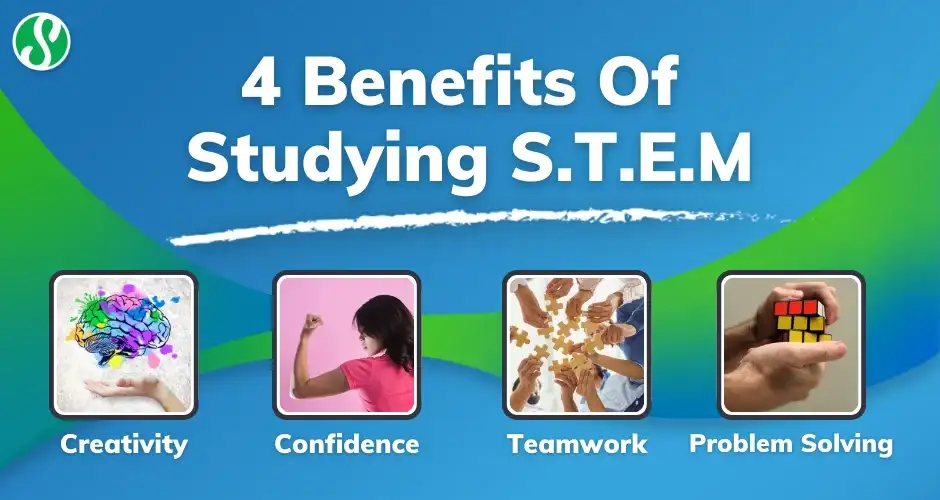
Education is changing rapidly as technology, scientific discovery, and innovation continue to shape everyday life. Students need more than the ability to memorize facts or pass examinations. They also need to understand complex problems, think critically, work with others, and apply their knowledge to real-world situations. This is where science, technology, engineering, and mathematics play an important role.
The importance of STEM education goes beyond preparing students for careers in science and technology. It helps young people develop practical skills, explore new ideas, and become confident problem-solvers. By connecting classroom learning with real-life challenges, STEM education encourages students to understand how different subjects work together.
Schools that provide meaningful STEM learning opportunities can help students prepare for further education, future employment, and responsible participation in a technology-driven society.
What Is STEM Education?
STEM education is an educational approach that combines four major disciplines: science, technology, engineering, and mathematics. These subjects help students understand the natural world, use digital tools, design solutions, and work with numbers and data.
Rather than teaching every subject in isolation, integrated STEM learning connects concepts across disciplines. For example, students designing a small bridge may use engineering principles, mathematical measurements, scientific knowledge about materials, and digital tools to test their design.
This approach encourages learners to apply what they know instead of simply remembering information.
STEM education can be introduced at different stages of learning. Young children may explore basic scientific ideas through building blocks, nature observations, and simple experiments. Older students can develop more advanced skills through robotics, coding, engineering challenges, and data analysis.
The goal is to make learning relevant, engaging, and connected to the world beyond the classroom.
Why Is STEM Education Important for the Next Generation?
The next generation will face challenges involving environmental sustainability, public health, digital security, transportation, and technological development. Understanding STEM concepts can help students explore these issues and contribute to potential solutions.
Here are several reasons STEM education matters for modern learners.
1. Develops Critical Thinking Skills
Critical thinking helps students evaluate information, identify assumptions, compare possible explanations, and make informed decisions. These abilities are useful in nearly every subject and profession.
STEM activities encourage learners to ask questions and investigate how things work. Instead of immediately accepting an answer, students learn to examine evidence and test different ideas.
For example, a science experiment requires students to observe results, identify patterns, and decide whether the evidence supports their original prediction. An engineering challenge may require them to compare several designs before selecting the most effective option.
Regular opportunities to investigate problems help students become more independent thinkers. They learn that good decisions depend on reasoning, evidence, and careful evaluation rather than guesswork.
2. Strengthens Problem-Solving Abilities
Problem-solving is one of the most valuable skills students can develop. Everyday life frequently involves situations that require people to identify a challenge, consider possible solutions, and evaluate the results.
STEM learning gives students practical opportunities to follow this process.
A classroom project might ask students to design a paper tower that can support a specific weight. Learners must plan their structure, select materials, test stability, and make improvements when the first attempt fails.
Through this experience, students learn to break complex tasks into manageable steps. They also discover that mistakes can provide useful information.
These lessons encourage persistence and adaptability. Students begin to see difficult problems as opportunities to learn rather than obstacles that must be avoided.
3. Prepares Students for Future Careers
Technology continues to influence industries such as healthcare, manufacturing, agriculture, transportation, finance, education, and communication. Many occupations require at least some understanding of digital systems, numerical information, or scientific principles.
STEM education introduces students to the knowledge and skills that can support future career opportunities.
Possible STEM-related career paths include:
- Software development and computer programming
- Engineering and product design
- Healthcare and biomedical research
- Environmental science and renewable energy
- Data analysis and artificial intelligence
- Robotics and advanced manufacturing
- Mathematics, statistics, and scientific research
However, STEM education is not only for students who plan to become engineers or scientists. Analytical thinking, digital literacy, and problem-solving can benefit learners in business, public services, creative industries, and many other professional fields.
Early exposure to STEM subjects also helps students discover their interests before making important educational and career decisions.
4. Encourages Creativity and Innovation
Creativity is often associated with art and writing, but it is equally valuable in science, engineering, and technology. Developing a new product, improving a process, or finding a more efficient solution requires imagination as well as technical knowledge.
STEM projects encourage students to experiment with different approaches. There may be several possible ways to complete a task, and learners must decide which solution best meets the requirements.
For example, students building a model vehicle may experiment with wheel sizes, body shapes, and different materials. Each design choice gives them an opportunity to test an idea and improve the final result.
This combination of creativity and analytical thinking helps learners understand that innovation is a process. New ideas often emerge through observation, experimentation, feedback, and repeated improvement.
5. Improves Digital Literacy
Digital technology is now part of education, communication, employment, and everyday life. Students need to understand how digital tools work and how to use them responsibly.
STEM education can develop digital literacy through activities involving coding, data visualization, simulations, digital design, and educational software.
Students may learn how algorithms organize instructions, how spreadsheets help analyze information, or how sensors collect data from the environment.
These experiences can also introduce important discussions about online safety, privacy, misinformation, and responsible technology use.
Digital literacy means more than knowing how to operate a device. It involves evaluating digital information, understanding the limitations of technology, and making thoughtful decisions when using online tools.
6. Connects Classroom Learning With Real Life
Students sometimes struggle to understand why they need to learn a particular concept. STEM education helps answer this question by showing how academic knowledge can be applied to practical situations.
Mathematics can help students calculate expenses, measure materials, or compare energy use. Science can explain weather patterns, plant growth, and environmental changes. Technology can help learners organize information, while engineering can demonstrate how people design structures and systems.
Project-based activities make these connections more visible.
For example, a school garden project can combine biology, measurement, water conservation, and basic data collection. Students can observe plant growth, calculate planting distances, compare soil conditions, and investigate how water affects development.
When learners see how subjects connect to real situations, academic concepts can become more meaningful and memorable.
The Four Core Components of STEM Education
Understanding the four STEM disciplines helps teachers create balanced learning experiences.
Science: Understanding the World
Science encourages students to observe natural phenomena, ask questions, form hypotheses, and evaluate evidence. It develops curiosity and helps learners understand how the physical and living worlds operate.
Classroom science activities may include investigating plant growth, exploring forces and motion, studying ecosystems, or comparing the properties of different materials.
Technology: Using Tools to Solve Problems
Technology involves the tools, systems, and digital resources people use to complete tasks and address challenges.
Students can develop technological skills through computer applications, coding exercises, digital presentations, simulations, and data collection tools.
Effective technology education also teaches learners to use these resources thoughtfully and responsibly.
Engineering: Designing and Improving Solutions
Engineering focuses on identifying needs, designing solutions, building models, testing results, and making improvements.
Students might construct a bridge from simple materials, create a water filtration model, or design a device that protects an object during a fall.
These activities develop planning, teamwork, creativity, and practical reasoning.
Mathematics: Working With Numbers and Patterns
Mathematics supports measurement, calculation, logical reasoning, and data analysis. It helps students describe relationships and make decisions based on numerical evidence.
Through STEM activities, students can use geometry to design structures, statistics to interpret experiment results, and calculations to compare the efficiency of different solutions.
Connecting mathematics with practical tasks can help learners understand why mathematical concepts matter.
How STEM Education Supports Academic Achievement
The importance of STEM education is also reflected in its potential to strengthen learning across different subjects. When students actively investigate problems and apply concepts, they gain opportunities to deepen their understanding.
Integrated STEM activities can support academic learning in several ways.
Deeper understanding: Students apply concepts in practical situations, helping them connect theoretical knowledge with observable results.
Knowledge retention: Experiments, discussions, and hands-on activities give learners multiple ways to engage with information.
Mathematical reasoning: Measurement, calculation, and data analysis help students practice mathematical skills in meaningful contexts.
Scientific literacy: Students learn to interpret evidence, evaluate explanations, and distinguish reliable conclusions from unsupported claims.
Independent learning: Research and project work encourage learners to ask questions, explore resources, and take responsibility for their progress.
Research reviews have reported positive learning outcomes from integrated STEM approaches, although results vary according to students’ ages, teaching methods, subject areas, and learning environments. This means STEM education is most effective when activities are carefully planned and supported by strong teaching rather than treated as a collection of disconnected projects.
Practical STEM Activities for Different Age Groups
STEM education does not always require expensive equipment or advanced technology. Teachers can introduce meaningful learning experiences using accessible materials and age-appropriate challenges.
Early Childhood Education
Young children can explore STEM through play, observation, and simple construction activities.
Useful examples include:
- Building towers with blocks and comparing their heights
- Sorting objects by shape, size, or material
- Observing how plants grow over time
- Exploring which objects float or sink
- Creating simple patterns using everyday materials
These activities develop curiosity, observation, early mathematical thinking, and confidence in asking questions.
Elementary School
Elementary students can participate in projects that connect science, mathematics, engineering, and technology.
Teachers might ask students to build a paper bridge, design a marble maze, measure rainfall, or investigate which materials absorb water most effectively.
Students can record their observations, compare results, and explain why one solution worked better than another.
Middle School
Middle school learners can explore more complex challenges that require planning and collaboration.
Possible activities include creating simple computer programs, designing a model renewable-energy system, analyzing local environmental data, or constructing a water filtration prototype.
These projects help students develop more structured problem-solving methods and understand how different STEM disciplines work together.
High School
High school students can undertake extended projects that resemble real scientific or engineering work.
Examples include developing a mobile application prototype, analyzing community energy consumption, designing an assistive device, or creating a sensor-based environmental monitoring system.
Students can document their methods, analyze results, present their findings, and reflect on possible improvements.
These experiences can also help learners explore potential university programs and career interests.
How Teachers Can Make STEM Education More Effective
Successful STEM instruction requires more than providing students with equipment or assigning a science project. Teachers need to create an environment where learners can investigate questions, collaborate, and learn from mistakes.
The following strategies can help schools improve STEM learning.
Use Project-Based Learning
Project-based learning gives students a meaningful problem to investigate over a period of time. Learners plan their approach, conduct research, create solutions, and present their results.
Projects should have clear learning objectives and realistic expectations. Teachers can guide students without removing the opportunity for independent thinking.
Encourage Inquiry and Experimentation
Teachers can begin lessons with an interesting question rather than immediately explaining every concept.
For example, students might investigate why some structures remain stable while others collapse. They can develop predictions, test different designs, and use the evidence to explain their conclusions.
This approach encourages active participation and scientific reasoning.
Integrate Multiple Subjects
STEM learning becomes more meaningful when students recognize connections between disciplines.
A renewable-energy project, for instance, may combine scientific principles, mathematical calculations, engineering design, and digital research.
Teachers should identify the specific learning goals for each discipline so that integration strengthens subject knowledge rather than making lessons unfocused.
Promote Collaboration
Many real-world challenges require people with different skills to work together. Group projects help students practice communication, planning, negotiation, and shared decision-making.
Teachers can assign clear responsibilities while allowing students to contribute ideas and learn from one another.
Assessment should consider both the final product and the learning process, including individual contributions.
Make Failure Part of Learning
Not every experiment or design will succeed on the first attempt. Students need opportunities to identify what went wrong, understand the evidence, and revise their approach.
Teachers can encourage reflection by asking questions such as: What did you expect to happen? What actually happened? What could you change next time?
This helps students develop resilience and understand that improvement often requires several attempts.
Provide Inclusive Learning Opportunities
Every student should have opportunities to participate in STEM, regardless of gender, disability, background, or previous academic performance.
Teachers can offer different ways to engage with a task, provide accessible materials, use flexible group structures, and connect activities with students’ interests.
Schools should also challenge stereotypes that suggest certain STEM subjects or careers are suitable only for particular groups.
An inclusive classroom helps more learners develop confidence and recognize their potential.
Challenges in Implementing STEM Education
Although STEM education offers important opportunities, schools may face challenges when introducing or expanding these programs.
Limited Resources
Some schools lack laboratories, specialized equipment, reliable internet access, or suitable learning materials. However, many STEM concepts can be explored through low-cost activities using paper, recycled materials, measuring tools, and everyday objects.
Schools can begin with simple projects and expand their resources gradually.
Teacher Training
Effective STEM instruction requires teachers to understand their subject areas and know how to connect them through meaningful activities. Professional development, collaboration between subject teachers, and shared lesson planning can help educators build these skills.
Unequal Access and Participation
Students may have different levels of access to technology, extracurricular programs, and learning support. Schools should avoid designing STEM activities that depend entirely on expensive devices or resources available only outside school.
Accessible classroom projects can help reduce these barriers and give students a more equal starting point.
Balancing Practical Work and Core Knowledge
Hands-on projects are valuable, but students still need clear explanations, structured practice, and a strong foundation in scientific and mathematical concepts.
Teachers should balance exploration with direct instruction, feedback, and assessment. Activities should reinforce specific learning objectives instead of being used only for entertainment.
The Role of Parents in STEM Learning
Parents and caregivers can support STEM education without needing advanced technical knowledge. Everyday activities offer many opportunities for children to practice observation, measurement, reasoning, and problem-solving.
Cooking together can introduce fractions, proportions, and temperature. Gardening can help children explore plant growth, weather, and ecosystems. Building toys can encourage spatial reasoning, design, and experimentation.
Parents can also support learning by asking open-ended questions, encouraging curiosity, and allowing children to investigate their own ideas.
Instead of immediately providing an answer, adults can ask children what they think might happen and why. This encourages them to explain their reasoning and learn through discovery.
Positive encouragement is especially important when children find a task difficult. Praising effort, thoughtful questions, and improvements can help them develop confidence and persistence.
How STEM Education Prepares Students for Future Challenges
The future will bring new technologies, changing employment patterns, and complex social and environmental challenges. Students will need the ability to learn continuously, evaluate information, and adapt their skills to unfamiliar situations.
STEM education can help prepare learners for this changing environment in several ways.
First, it builds a foundation for understanding emerging technologies, including automation, artificial intelligence, and data-driven systems.
Second, it develops analytical and practical skills that can support innovation across different industries.
Third, it encourages students to investigate real-world issues, such as clean energy, sustainable agriculture, water management, and public health.
Finally, it helps learners understand that solving complex problems often requires collaboration between people with different areas of expertise.
STEM education cannot predict every future job or guarantee career success. However, it can give students a stronger foundation for adapting to new opportunities and making informed decisions throughout their lives.
Frequently Asked Questions About the Importance of STEM Education
What is the main purpose of STEM education?
The main purpose of STEM education is to help students understand and apply concepts from science, technology, engineering, and mathematics. It also supports critical thinking, creativity, collaboration, and problem-solving through practical and interdisciplinary learning experiences.
Why is STEM education important for children?
STEM education helps children develop curiosity, logical reasoning, early mathematical understanding, and confidence in exploring unfamiliar problems. Age-appropriate activities can make learning engaging while preparing students for more advanced academic challenges.
What skills do students gain from STEM education?
Students can develop analytical thinking, problem-solving, creativity, digital literacy, communication, teamwork, data interpretation, and practical design skills. The specific outcomes depend on the activities, teaching methods, and learning objectives.
Does STEM education only prepare students for technical careers?
No. Although STEM education can support pathways into engineering, science, healthcare, and technology, its broader skills are useful in many fields. Critical thinking, numerical reasoning, and digital literacy can benefit students in business, education, public service, and other professions.
How can schools teach STEM without expensive equipment?
Schools can use everyday materials, simple experiments, paper-based design challenges, recycled objects, outdoor observations, and collaborative projects. Effective STEM learning depends on clear objectives and thoughtful teaching, not only on expensive technology.
How can teachers measure the success of STEM education?
Teachers can assess students through project outcomes, practical demonstrations, written explanations, presentations, quizzes, observation, and reflection. Using several assessment methods helps educators evaluate both subject knowledge and skills such as reasoning, collaboration, and problem-solving.
Conclusion
The importance of STEM education lies in its ability to connect academic knowledge with practical skills that students can use throughout their lives. By integrating science, technology, engineering, and mathematics, educators can help learners become stronger problem-solvers, more creative thinkers, and more confident users of information and technology.
Effective STEM education also supports academic development, introduces students to a wide range of career possibilities, and encourages them to investigate real-world challenges. These benefits are most likely to emerge when learning activities have clear objectives, teachers receive appropriate support, and every student has a meaningful opportunity to participate.
Schools do not need to transform their entire curriculum overnight. They can begin with accessible experiments, collaborative projects, real-life questions, and activities that connect different subjects.
By making STEM learning practical, inclusive, and engaging, educators and families can help the next generation build the knowledge and adaptable skills needed to navigate an increasingly complex world.
